The Prescription For Pavana
17th February 2026
"It's Thursday today. And it's the fourth case of 3rd-stage lung cancer referred to us. Is the AQI
that bad?" asked the Oncologist, head of Ruby Hall Pune - Dr. Vikram Sarode, to his assistant,
Mayank. He smiled as he signed the prescription. He was engrossed in writing the following line of
treatment as advised by the doctor.
After the regular rounds were done, Dr. Vikram invited Mayank to his cabin for lunch. Mayank agreed,
subconsciously as he was typing something on his phone. Dr. Vikram noticed the same and hence asked
in a mischievous tone, "If you have another plan, then please continue." The young intern blushed
and replied, "I can't miss a chance to have lunch with you, Sir. I was willing to connect with you
personally to discuss something. I think this will be the right time."
"So if you have reported your lunch plan with me, now get your tiffin, I will see you in my cabin in
the next 5 minutes", ordered the senior. "Sure, Sir", responded the junior.
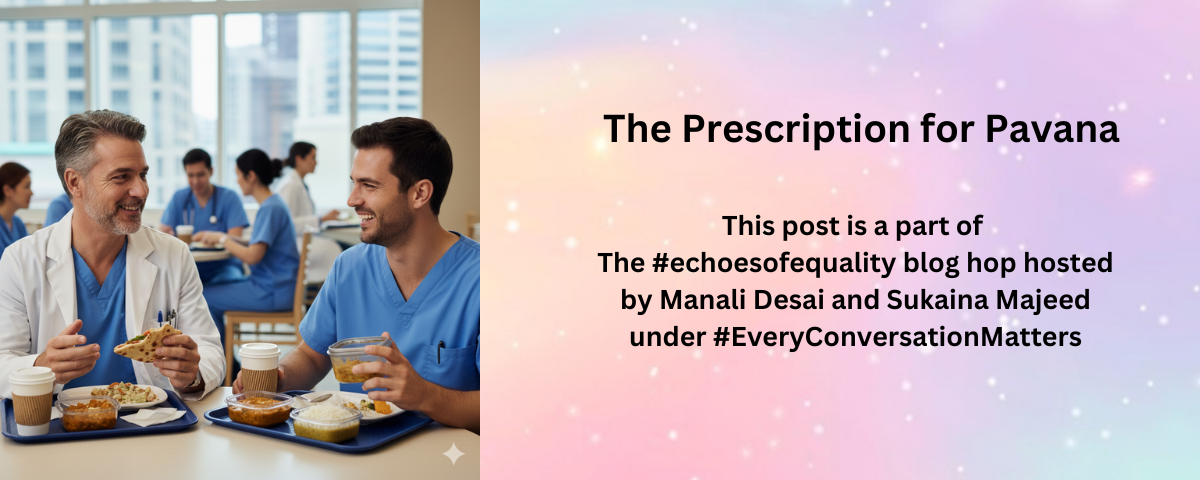
After exchanging some alu wadi, koshimbir, and parathas , the two gentlemen proceeded
for a glass of
masala chaas from their hospital canteen. They cheered the tall chaas glasses amicably as if
they
were beer mugs! Mayank started narrating his side of the story.
"Sir, the last patient we checked, I know him. He is from Pavana. My friend, Surbhi, runs an NGO
named RayHope Foundation for cancer patients. Recently, after getting back-to-back cases from
Pavana, she took the matter into her hands and started investigating. Many industries in Pune dump
their waste in the Pavana. Of late, the quantity and frequency of dumps being sent there have
increased considerably. Whenever she reports to me about cancer patients, I see to it they are
treated by you, after all, you are the best we have."
Dr. Vikram nodded in acknowledgement.
Mayank continued with a smile, "But Sir, it does not end here. In addition to cancer, we have
noticed that there are many other health issues in the residents nearby. Patients with cases of
neurological symptoms like headaches, fatigue, sleep disturbances, and neurotoxic damage appear
frequently. Birth defects, immune disorders, and kidney/liver dysfunction have also been observed."
"Aren't the residents taking any action? Why are they allowing their neighborhood to be a dump yard?
I went to Pavana in 2013. Such a serene and scenic place it is. I can't imagine it being turned into
a dump yard!", interrupted Dr. Vikram. Mayank raised his shoulder in acceptance. He collected the
empty glass from the doctor and deposited it in the glass washing section. As they walked towards
Dr. Vikram's cabin again, he asked, "What are the local authorities doing?"
"Sir, the Sarpanch's son is at a higher post in one of the manufacturing plants," replied Mayank in
a faded tone.
"Oh! I see," uttered Dr. Vikram, "Is there anything we can do?"
"I want to do, Sir, but I don't have any idea what should be done? I just can't tolerate this. Every
weekend, I go to assist Surbhi, and I feel like cursing the luxurious life we have. Living in these
striking contrasts leaves me frustrated. Tell me, Sir, what can we do?" asked Mayank with the energy
of a live wire.
"For now, calm down. See, villagers facing industrial waste dumping can take collective action
despite corruption. The first step should be unity, and the second one should be documentation.
Escalating to local authorities won't be of any use here; higher authorities or courts would be
useful. Further contact NGOs like Greenpeace India or seek legal aid from People's Union for Civil
Liberties (PUCL). Media coverage amplifies voices, pressuring officials. Demand remediation funds
from companies via trusts. This has worked in the past and should work well now, too."
Mayank was mentally making notes of everything his Sir said.
"As our long-term goal, we can pursue Right to Information (RTI) for company consents and push for
environmental impact assessments. Community monitoring via apps or local watches prevents future
dumping. Once that stops or reduces, villagers will be at ease."
"I now have a proper plan and direction to work on. Thank you for all your help, Sir. I will discuss
things with Surbhi in the evening and then keep bugging you if I have any doubts. Also, can you help
me with a trusted lawyer for the long-term goals?"
Dr. Vikram patted Mayank's back in encouragement and handed him a business card. "Here. My brother
is a lawyer. He has dealt with cases like these earlier. He will help you; tell him I have
referred."
"I can't thank you enough, Sir. After today's patient, I was so baffled. But thanks to you for
hearing me out and guiding me the right way. Power and money are such disastrous tools, I tell
you..."
"More than that, if the villagers had been educated, they could not be manipulated easily. So your
next mission should be creating awareness..." Dr. Vikram interrupted.
"Roger that, Sir. I will get the plan ready by tomorrow. Thanks once again."
"Pleasure is mine, young man. I am glad I could be the medium. All the best to you."
When big companies plan their strategies to increase sales and profits, I wish they had a plan in
place to dump their waste in a way that does not create problems for others. India is a land of
villages, and villages are not dumpyards. If this continues, the rich will keep getting richer, and
the poor will die of unnamed diseases.
Note: Although the places mentioned in this post are real, the whole story and character names are
fictional.
This post is a part of 'Echoes of Equality Blog Hop' hosted by Sukaina Majeed
and Manali Desai
under #EveryConversation Matters blog hop series
Comments