Not Before You
24th Dec 2024
"She is the single parent of a child with mental and physical disabilities.
What is her worst dear?
That she will go before her child."
The book starts with this dedication. After reading this, you may feel like you have a glimpse of
the whole story, no, my friend, you are wrong. This is just the trailer. A whole sea of pain,
realizations, and thought-provoking incidents wait for you inside the pages.
I watched Guzarish when I was in the 3rd year of my engineering (2011) and since then I have been in
favour of Euthanasia. When the survival of one becomes a punishment for other/others, I think it is
favourable for them to exit. My thoughts May sound harsh, sharp, and rude, which they are, I know.
But they are practical. Caretaking is not an easy responsibility. When a caretaker talks about
euthanasia, they are labelled to be heartless, insensitive, and irresponsible. But for those who
take the liberty of labelling these titles, I challenge them to live the caretaker's life for one
day. They love the patient, and they do not arrive at this resort easily. After substantial
tolerance, they are convinced to reach there.
Now coming to the book. Jaya a career-oriented, dynamic girl, falls in love with Suraj who is a yoga
instructor. While Jaya has a practical approach to life, Suraj is a more spiritually driven person.
Opposites attract, as they say, but they may not be compatible. After Nikhil's birth and his missed
cerebral palsy with structural scoliosis are detected, the only mission in Jaya's life is to isolate
him from the world. Her motherly instinct does not let her trust ANYONE when taking Nikhil's care,
not even his father Suraj. Tired of being sent on a guilt trip frequently, Suraj leaves the family
to find his solace in the Yoga capital of the country, Rishikesh. Amidst all this, their younger
daughter Divya grows up carrying shady images of her parents.
The complexities of human relationships are so beautifully portrayed that they are very relatable.
Jaya's constant struggle to convince Divya to love her equally and her guilt of not spending
considerable time with her is evident. Jaya turning bitter and maintaining distance from her closest
friend when she embraces motherhood and gives birth to a healthy, normal child is reasonable and
human. Along with the characters, death keeps peeping in between the scenes, as if it waited to
arrive and play its part.
Not everyone dares to let the world/others not go through the problems they have been through. They
try to become a survival guide or try to rescue, creating awareness about it in as many people as
possible. Jaya and Suraj reunite for the same purpose. The climax is so thoughtful, leaving the
reader on an optimistic note.
One major aspect that came as a learning to me is that a woman's life changes once she becomes a
mother, but a man's life also changes after he becomes a father. Most men wait to pick up
responsibilities as fathers, but the conditioning over the years has happened in a way that women
tend to take it all on themselves. High time we shatter this myth. I have been through it and
learned it the hard way.
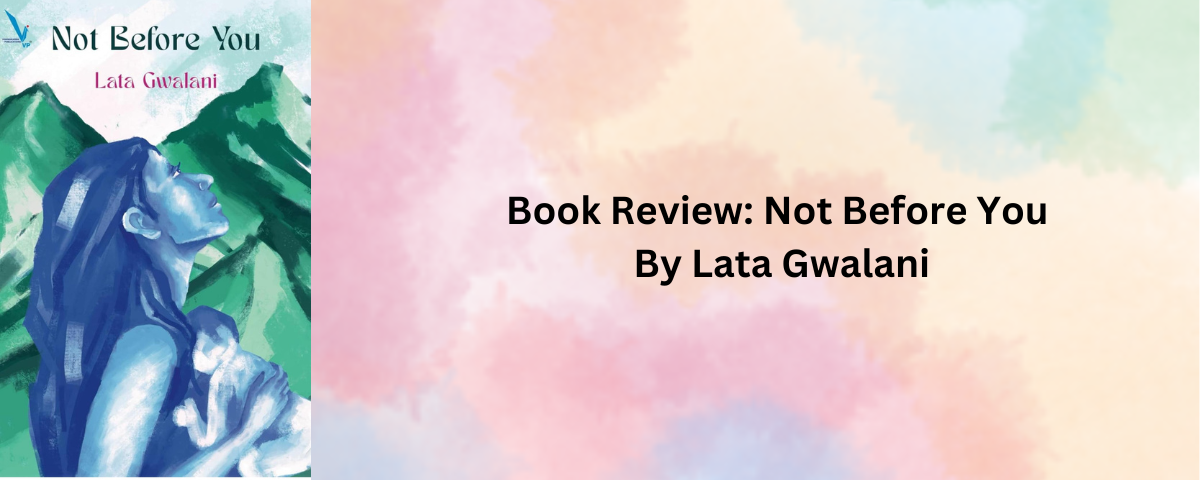
The prologue and epilogue serve an apt purpose. The cover is the best representation of motherhood,
with the child mounted on the mother's chest and mountains in the background. The colours are
calming and soothing.
Lines from the book that I am keping with me:
Who says the family is held together by blood ties? Strangers wall into our lives and become family.
Why are people lonely? In every relationship that is crowded with responsibilities and duties,
someone is lonely. It so happens that loneliness pushes you so far away from others that soon you
begin to like that place.
They stood at touching distance from each other, while their hearts pinned for a reassuring hug.
Sorrow brings people together in a way that happiness never does.
Human beings love to be mentally strong until they are forced to put it to use constantly. Then it
becomes exhausting.
Is motherhood truly a fountain of endless hope?
Who says only a child needs the love of parents? Parents, too, yearn for the love of their children.
Sometimes we are so blinded by our convictions that we don't want to see the other person's
situation.
It is always harder to be left behind than to be the one to go.
Most women lead their lives on the miserable horns of a dilemma - whether to be a wife or to be a
mother.
I am yet to see a greater warrior than a mother protecting her child.
A mother can apologize for neglecting one child. But she cannot apologize for loving another.
Imprisoned by our past, we are always looking for ways to redeem ourselves.
This book review is a part of Blogchatter #TBRchallenge
Comments