Bravery
6th April 2026
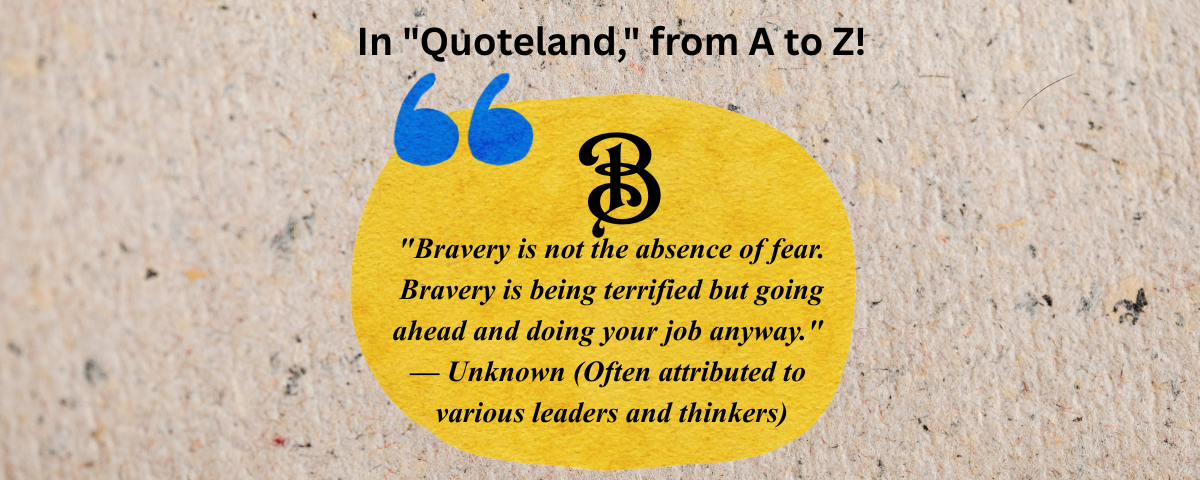
"Bravery is not the absence of fear. Bravery is being terrified but going ahead and doing your job
anyway." — Unknown (Often attributed to various leaders and thinkers)
Whenever I think that I am about to take a huge risk, I am reminded by the thought, "In the end, you
only regret the chances you did not take", and then a series of thoughts follows, "What if it turns
out to be a major thing? What if it's not as bad as I am expecting it to be? What if it works out
well?" And all these what ifs could fall in place only once I try. Bravery does not only count when
it's big actions and grand gestures. Sometimes, the smallest of changes happen because someone acts
bravely and does something that they have never done before. It all begins messy, scattered, and
doubtful. But if the intent behind doing it is pure, there is a rare chance it will go wrong.
Can someone be scared and still be brave?
If they are doing it despite being scared, they are already brave. That's what bravery stands for.
Can bravery be learned?
It can be inspired by, but nobody can teach it to you. There is no format or module-wise course for
it. It is rather a conscious choice, choosing to do what you wish to do, irrespective of the fear
that it comes with.
What if the consequence of being brave is not as expected?
I would still congratulate them, because now at least they would not have the guilt of not trying,
not following their heart.
This post is a part of Blogchatter A2Z Challenge 2026.
Comments